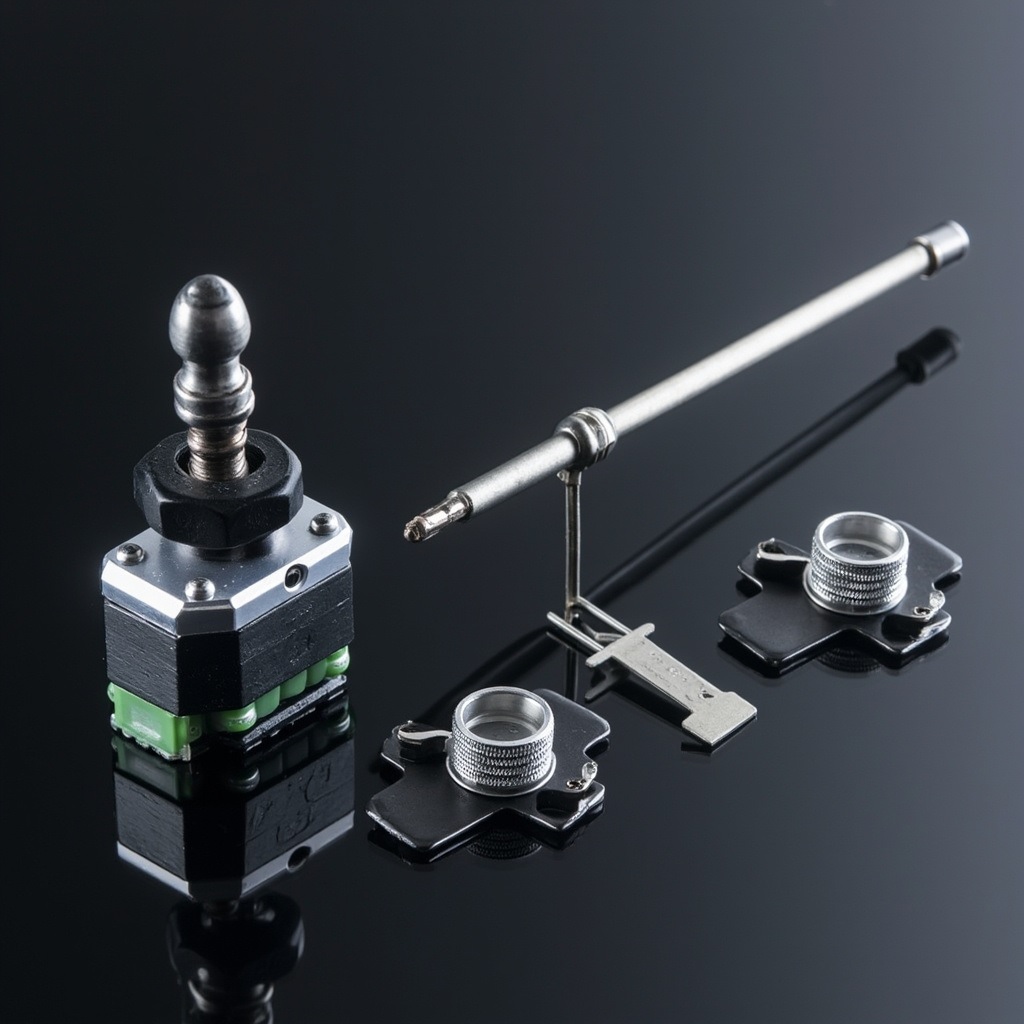
You’d be surprised how much a tiny switch can tell you just by looking at it. Most engineers and procurement specialists treat snap action micro switch as black boxes—they test them electrically and hope for the best. But the truth is, a trained eye can spot a dud before it ever touches a circuit board. Visual inspection isn’t just a quick glance; it’s a forensic exercise that separates precision components from cheap knockoffs. Let’s cut through the noise and get practical.
Start with the housing. Pick up the switch and examine the plastic casing. High-quality units, like those from Unionwell, use materials that resist thermal deformation and chemical corrosion. Look for uniform color, no flash lines, and a smooth surface finish. If you see rough edges, uneven texture, or faint discoloration, that’s a red flag. Cheap resin blends degrade faster under heat and humidity, leading to cracking or warping inside your assembly. Run your fingernail along the seams. If it catches, the mold quality is subpar.
Next, inspect the actuator button or lever. This is the part that gets hammered thousands of times per cycle. A premium switch will have a precisely shaped actuator with no burrs or asymmetry. Press it gently. The travel should feel crisp, not mushy or gritty. Listen for a clean, sharp click—that’s the snap action mechanism engaging. A dull or delayed click often means inconsistent contact gap or poor spring tension. Unionwell switches, for instance, are known for their audible, tactile feedback because the internal leaf spring is stamped to tight tolerances.
Now flip the switch over and look at the terminals. Are they straight? Are they free of oxidation or plating defects? High-quality terminals are made from brass or phosphor bronze with a thick tin or silver plating. If you see pitting, uneven coating, or a yellowish tint, that’s oxidation starting before the switch even ships. Also check the terminal insertion points where they enter the housing. Any gaps or misalignment suggests sloppy assembly. A well-made switch will have terminals that are fully seated and sealed, often with epoxy or ultrasonic welding around the base.
Don’t skip the markings. Legitimate manufacturers laser-etch or pad-print part numbers, ratings, and certification logos directly onto the body. Faded, smudged, or poorly aligned printing is a sign of rushed production. Look for clear indicators like UL, cUL, or ENEC marks. If the printing looks like it was done with a cheap inkjet, walk away. Unionwell consistently uses high-contrast, permanent markings that survive solvent wiping and abrasion testing.
Finally, check the overall weight and balance. Pick up a known good switch in one hand and the suspect one in the other. A quality snap action micro switch feels solid, not hollow or flimsy. The difference often comes down to the internal components: thicker contact rivets, a sturdier common terminal, and a properly tensioned blade. Cheap switches save weight by skimping on metal thickness, which directly impacts current-carrying capacity and mechanical life.
One more thing—look at the packaging. If the switches arrive loose in a bag with no anti-static protection or individual trays, that tells you something about the manufacturer’s quality culture. Reputable brands like Unionwell ship in organized, protective packaging that prevents terminal bending and contamination. It’s a small detail, but it correlates strongly with overall consistency.
Visual inspection won’t catch every hidden defect, but it will filter out the obvious losers. Train your team to look for these signs, and you’ll reduce field failures, warranty claims, and production line headaches. The best part? It costs nothing but a few seconds of attention. Next time you’re sourcing micro switches, let your eyes do the first round of testing. Your circuit boards will thank you.